AI Chatbots and Assistants

Explore the best AI Chatbots and Assistants — independent reviews, comparisons, pricing and step-by-step how-to guides, curated by Aizhi.

  • Separable filter

    Separable filter

    A separable filter in image processing can be written as product of two more simple filters. Typically a 2-dimensional convolution operation is separated into two 1-dimensional filters. This reduces the computational costs on an N × M {\displaystyle N\times M} image with a m × n {\displaystyle m\times n} filter from O ( M ⋅ N ⋅ m ⋅ n ) {\displaystyle {\mathcal {O}}(M\cdot N\cdot m\cdot n)} down to O ( M ⋅ N ⋅ ( m + n ) ) {\displaystyle {\mathcal {O}}(M\cdot N\cdot (m+n))} . == Examples == 1. A two-dimensional smoothing filter: 1 3 [ 1 1 1 ] ∗ 1 3 [ 1 1 1 ] = 1 9 [ 1 1 1 1 1 1 1 1 1 ] {\displaystyle {\frac {1}{3}}{\begin{bmatrix}1\\1\\1\end{bmatrix}}{\frac {1}{3}}{\begin{bmatrix}1&1&1\end{bmatrix}}={\frac {1}{9}}{\begin{bmatrix}1&1&1\\1&1&1\\1&1&1\end{bmatrix}}} 2. Another two-dimensional smoothing filter with stronger weight in the middle: 1 4 [ 1 2 1 ] ∗ 1 4 [ 1 2 1 ] = 1 16 [ 1 2 1 2 4 2 1 2 1 ] {\displaystyle {\frac {1}{4}}{\begin{bmatrix}1\\2\\1\end{bmatrix}}{\frac {1}{4}}{\begin{bmatrix}1&2&1\end{bmatrix}}={\frac {1}{16}}{\begin{bmatrix}1&2&1\\2&4&2\\1&2&1\end{bmatrix}}} 3. The Sobel operator, used commonly for edge detection: [ 1 2 1 ] ∗ [ 1 0 − 1 ] = [ 1 0 − 1 2 0 − 2 1 0 − 1 ] {\displaystyle {\begin{bmatrix}1\\2\\1\end{bmatrix}}{\begin{bmatrix}1&0&-1\end{bmatrix}}={\begin{bmatrix}1&0&-1\\2&0&-2\\1&0&-1\end{bmatrix}}} This works also for the Prewitt operator. In the examples, there is a cost of 3 multiply–accumulate operations for each vector which gives six total (horizontal and vertical). This is compared to the nine operations for the full 3x3 matrix. Another notable example of a separable filter is the Gaussian blur whose performance can be greatly improved the bigger the convolution window becomes.

    Read more →
  • Kindwise

    Kindwise

    FlowerChecker, also known as Kindwise, is a company that uses machine learning to identify natural objects from images. This includes plants and their diseases, but also insects and mushrooms. It is based in Brno, Czech Republic. It was founded in 2014 by Ondřej Veselý, Jiří Řihák, and Ondřej Vild, at the time Ph.D. students. == Features & Tools == FlowerChecker offers multiple products. Plant.id is a machine learning-based plant identification API launched in 2018, with the plant disease identification API, plant.health, released in April 2022. The plant.id API is suitable for integration into other software, such as mobile apps or urban trees from remote-sensing imagery. Other products include insect.id, mushroom.id and crop.health are machine learning-based identification APIs for the identification of insects, fungi and economically important plants, respectively, and include also online public demos. The FlowerChecker app was discontinued in October 2024 after 10 years of successful operation. == Recognition == In 2019, FlowerChecker won the Idea of the Year award in the AI Awards organized by the Confederation of Industry of the Czech Republic. In 2020, an academic study comparing ten free automated image recognition apps showed that plant.id's performance excelled in most of the parameters studied. In an independent study comparing different image-based species recognition models and their suitability for recognizing invasive alien species, the plant.id achieved the highest accuracy compared to other tools. In a subsequent study, plant.id was utilized to evaluate urban forest biodiversity using remote-sensing imagery, achieving the highest accuracy in tree species identification among compared methods. The technology has also been referenced as an example of practical integration of AI-based plant identification into cross-platform precision agriculture systems. == Research activities == Flowerchecker cooperates with the Nature Conservation Agency of the Czech Republic on a biodiversity mapping project. FlowerChecker plans to adapt its services to participate in the control of invasive species. In 2022, the company entered a consortium to develop a weeder capable of in-row weed detection and removal. In 2025, it received funding for the development of a technology for the removal of invasive species.

    Read more →
  • Protégé (software)

    Protégé (software)

    Protégé is a free, open source ontology editor and a knowledge management system. The Protégé meta-tool was first built by Mark Musen in 1987 and has since been developed by a team at Stanford University. The software is the most popular and widely used ontology editor in the world. == Overview == Protégé provides a graphical user interface to define ontologies. It also includes deductive classifiers to validate that models are consistent and to infer new information based on the analysis of an ontology. Like Eclipse, Protégé is a framework for which various other projects suggest plugins. This application is written in Java and makes heavy use of Swing to create the user interface. According to their website, there are over 300,000 registered users. A 2009 book calls it "the leading ontological engineering tool". Protégé is developed at Stanford University and is made available under the BSD 2-clause license. Earlier versions of the tool were developed in collaboration with the University of Manchester.

    Read more →
  • GENESIS (software)

    GENESIS (software)

    GENESIS (The General Neural Simulation System) is a simulation environment for constructing realistic models of neurobiological systems at many levels of scale including: sub-cellular processes, individual neurons, networks of neurons, and neuronal systems. These simulations are “computer-based implementations of models whose primary objective is to capture what is known of the anatomical structure and physiological characteristics of the neural system of interest”. GENESIS is intended to quantify the physical framework of the nervous system in a way that allows for easy understanding of the physical structure of the nerves in question. “At present only GENESIS allows parallelized modeling of single neurons and networks on multiple-instruction-multiple-data parallel computers.” Development of GENESIS software spread from its home at Caltech to labs at the University of Texas at San Antonio, the University of Antwerp, the National Centre for Biological Sciences in Bangalore, the University of Colorado, the Pittsburgh Supercomputing Center, the San Diego Supercomputer Center, and Emory University. == Neurons and Neural Systems == GENESIS works by creating simulation environments for constructing models of neurons or neural systems. "Nerve cells are capable of communicating with each other in such a highly structured manner as to form neuronal networks. To understand neural networks, it is necessary to understand the ways in which one neuron communicates with another through synaptic connections and the process called synaptic transmission". Neurons have a specialized structure for their function, they "are different from most other cells in the body in that they are polarized and have distinct morphological regions, each with specific functions". The two important regions of a neuron are the dendrite and the axon. "Dendrites are the region where one neuron receives connections from other neurons. The cell body or soma contains the nucleus and the other organelles necessary for cellular function. The axon is a key component of nerve cells over which information is transmitted from one part of the neuron (e.g., the cell body) to the terminal regions of the neuron". The third important piece of a neuron is the synapse. "The synapse is the terminal region of the axon this is where one neuron forms a connection with another and conveys information through the process of synaptic transmission". Neural networks like the ones simulated with GENESIS software can quickly become highly complex and difficult to understand. "Just a few interconnected neurons (a microcircuit) can perform sophisticated tasks such as mediate reflexes, process sensory information, generate locomotion and mediate learning and memory. Even more complex networks, macrocircuits, consist of multiple embedded microcircuits. Macrocircuits mediate higher brain functions such as object recognition and cognition". GENESIS endeavors to simulate neural systems as they are found in nature. Often, "a neuron can receive contacts from up to 10,000 presynaptic neurons, and, in turn, any one neuron can contact up to 10,000 postsynaptic neurons. The combinatorial possibility could give rise to enormously complex neuronal circuits or network topologies, which might be very difficult to understand". == History == GENESIS was developed by Dr. James M. Bower, in the Caltech laboratory, and first released to the public in 1988 in association with the first Methods in Computational Neuroscience Course at the Marine Biological Laboratory in Woods Hole, MA. Full source code for the software was released in the same year under an open software model for development. It's now supported by the Computational Biology Initiative at the University of Texas at San Antonio and is available free along with tutorial guides on its use. P-GENESIS, a parallel version of GENESIS, was first run in 1990 on the Intel Delta, which was the prototype for the Intel Paragon family of massively parallel supercomputers. == How GENESIS Works == GENESIS is useful in creating a simulation environment for constructing models of neurobiological systems, such as: sub-cellular processes individual neurons networks of neurons neuronal systems The GENESIS system is complicated, but relatively easy to use. An individual can input commands through one of three ways: script files, graphical user interface, or the GENESIS command shell. These commands are then processed by the script language interpreter. "The Script Language Interpreter processes commands entered through the keyboard, script files, or the graphical user interface, and passes them to the GENESIS simulation engine. The simulation engine also loads compiled object libraries, reads and writes data files, and interacts with the graphical user interface". Below is a graphical representation of the user input process and a sample GENESIS output. == Applications == Most current applications for GENESIS involve realistic simulations of biological systems. It is usually used to simulate the behavior of larger brain structures, for example the cerebral cortex. These studies most often occur in lab courses in neural simulation at Caltech and the Marine Biological Laboratory at Woods Hole, Massachusetts. GENESIS can be used in combination with Yale University’s software called NEURON as a means for scientists to collaborate to construct a physical description of the nervous system. The GENESIS software can also be used with Kinetikit in the modeling of signal transduction pathways. GENESIS has been used in many studies. Some of these studies involve research that focuses on the development of software that would be useful across many disciplines. Others are studies of neurons, such as Purkinje cells. These studies used GENESIS to simulate Purkinje cells and could be useful for the planning and development of later experiments using the GENESIS software. There may also be biomedical applications of the software. For example, St. Jude Medical in Europe has developed an implanted GENESIS device.

    Read more →
  • Egocentric vision

    Egocentric vision

    Egocentric vision or first-person vision is a sub-field of computer vision that entails analyzing images and videos captured by a wearable camera, which is typically worn on the head or on the chest and naturally approximates the visual field of the camera wearer. Consequently, visual data capture the part of the scene on which the user focuses to carry out the task at hand and offer a valuable perspective to understand the user's activities and their context in a naturalistic setting. The wearable camera looking forwards is often supplemented with a camera looking inward at the user's eye and able to measure a user's eye gaze, which is useful to reveal attention and to better understand the user's activity and intentions. == History == The idea of using a wearable camera to gather visual data from a first-person perspective dates back to the 70s, when Steve Mann invented "Digital Eye Glass", a device that, when worn, causes the human eye itself to effectively become both an electronic camera and a television display. Subsequently, wearable cameras were used for health-related applications in the context of Humanistic Intelligence and Wearable AI. Egocentric vision is best done from the point-of-eye, but may also be done by way of a neck-worn camera when eyeglasses would be in-the-way. This neck-worn variant was popularized by way of the Microsoft SenseCam in 2006 for experimental health research works. The interest of the computer vision community into the egocentric paradigm has been arising slowly entering the 2010s and it is rapidly growing in recent years, boosted by both the impressive advances in the field of wearable technology and by the increasing number of potential applications. The prototypical first-person vision system described by Kanade and Hebert, in 2012 is composed by three basic components: a localization component able to estimate the surrounding, a recognition component able to identify object and people, and an activity recognition component, able to provide information about the current activity of the user. Together, these three components provide a complete situational awareness of the user, which in turn can be used to provide assistance to the user or to the caregiver. Following this idea, the first computational techniques for egocentric analysis focused on hand-related activity recognition and social interaction analysis. Also, given the unconstrained nature of the video and the huge amount of data generated, temporal segmentation and summarization were among the first problems addressed. After almost ten years of egocentric vision (2007–2017), the field is still undergoing diversification. Emerging research topics include: Social saliency estimation Multi-agent egocentric vision systems Privacy preserving techniques and applications Attention-based activity analysis Social interaction analysis Hand pose analysis Ego graphical User Interfaces (EUI) Understanding social dynamics and attention Revisiting robotic vision and machine vision as egocentric sensing Activity forecasting Gaze prediction == Technical challenges == Today's wearable cameras are small and lightweight digital recording devices that can acquire images and videos automatically, without the user intervention, with different resolutions and frame rates, and from a first-person point of view. Therefore, wearable cameras are naturally primed to gather visual information from our everyday interactions since they offer an intimate perspective of the visual field of the camera wearer. Depending on the frame rate, it is common to distinguish between photo-cameras (also called lifelogging cameras) and video-cameras. The former (e.g., Narrative Clip and Microsoft SenseCam), are commonly worn on the chest, and are characterized by a very low frame rate (up to 2fpm) that allows to capture images over a long period of time without the need of recharging the battery. Consequently, they offer considerable potential for inferring knowledge about e.g. behaviour patterns, habits or lifestyle of the user. However, due to the low frame-rate and the free motion of the camera, temporally adjacent images typically present abrupt appearance changes so that motion features cannot be reliably estimated. The latter (e.g., Google Glass, GoPro), are commonly mounted on the head, and capture conventional video (around 35fps) that allows to capture fine temporal details of interactions. Consequently, they offer potential for in-depth analysis of daily or special activities. However, since the camera is moving with the wearer head, it becomes more difficult to estimate the global motion of the wearer and in the case of abrupt movements, the images can result blurred. In both cases, since the camera is worn in a naturalistic setting, visual data present a huge variability in terms of illumination conditions and object appearance. Moreover, the camera wearer is not visible in the image and what he/she is doing has to be inferred from the information in the visual field of the camera, implying that important information about the wearer, such for instance as pose or facial expression estimation, is not available. == Applications == A collection of studies published in a special theme issue of the American Journal of Preventive Medicine has demonstrated the potential of lifelogs captured through wearable cameras from a number of viewpoints. In particular, it has been shown that used as a tool for understanding and tracking lifestyle behaviour, lifelogs would enable the prevention of noncommunicable diseases associated to unhealthy trends and risky profiles (such as obesity and depression). In addition, used as a tool of re-memory cognitive training, lifelogs would enable the prevention of cognitive and functional decline in elderly people. More recently, egocentric cameras have been used to study human and animal cognition, human-human social interaction, human-robot interaction, human expertise in complex tasks. Other applications include navigation/assistive technologies for the blind, monitoring and assistance of industrial workflows, and augmented reality interfaces.

    Read more →
  • AI Futures Project

    AI Futures Project

    The AI Futures Project is a nonprofit research organization based in the United States that specializes in forecasting the development and societal impact of advanced artificial intelligence. The organization is best known for its 2025 scenario forecast, AI 2027, which examines the potential near-term emergence of artificial general intelligence (AGI) and its possible global consequences. == History == The AI Futures Project was founded in 2025 by Daniel Kokotajlo, a former researcher in the governance division of OpenAI. Kokotajlo resigned from OpenAI in April 2024, expressing concerns that the company prioritized rapid product development over AI safety and was advancing without sufficient safeguards. He founded the nonprofit to conduct independent forecasting and policy research. The organization is registered as a 501(c)(3) nonprofit in the United States and is funded through donations. It operates with a small research staff and network of advisors drawn from fields including AI policy, forecasting, and risk analysis. == Activities == The mission of the AI Futures Project is to develop detailed scenario forecasts of the trajectory of advanced AI systems to inform policymakers, researchers, and the public. In addition to written reports, the group has conducted tabletop exercises and workshops based on its scenarios, involving participants from academia, technology, and public policy. == AI 2027 == In April 2025, the AI Futures Project released AI 2027, a detailed scenario forecast describing possible developments in AI between 2025 and 2027. The report was authored by Daniel Kokotajlo along with Eli Lifland, Thomas Larsen, and Romeo Dean, with editing assistance from blogger Scott Alexander. The scenario depicts very rapid progress in AI capabilities, including the development of autonomous AI systems capable of recursive self-improvement. AI 2027 presents two alternative endings: one in which international competition over advanced AI leads to catastrophic loss of human control, and another in which coordinated global action slows down development and averts imminent disaster. The authors emphasize that the narratives are hypothetical and intended as planning tools rather than literal forecasts. == Reception == AI 2027 attracted attention from technology journalists and AI researchers. Some commentators praised the report for its level of detail and its usefulness as a strategic planning exercise, while others criticized the scenario as implausibly aggressive in its timelines. The report was cited in policy discussions about AI governance. U.S. Vice President JD Vance reportedly read AI 2027 and referenced its warnings in conversations about international AI coordination. More recent reporting noted that the authors of AI 2027 had publicly revised some of their timelines. According to Kokotajlo, developments since the report's original publication suggested a slower path toward fully autonomous AI research systems than initially forecasted.

    Read more →
  • Aidan Gomez

    Aidan Gomez

    Aidan Gomez is a British-Canadian computer scientist working in the field of artificial intelligence, with a focus on natural language processing. He is the co-founder and CEO of the technology company Cohere. == Early life and education == Gomez grew up in Brighton, Ontario. He graduated from the University of Toronto with a bachelor's degree in computer science and mathematics. He was pursuing a PhD in computer science from the University of Oxford. He paused his studies to launch Cohere. He was granted the PhD in 2024. == Career == In 2017, as a 20 year-old intern at Google Brain, Gomez was one of eight authors of the research paper "Attention Is All You Need", which is credited with changing the AI industry and helping lead to the creation of ChatGPT. The paper proposed a novel deep learning architecture called the transformer, that enables machine learning models to analyze large amounts of data for patterns, and then use those patterns to make predictions while leveraging GPU parallelization. It has been commonly adopted for training large language models and in the development of generative AI. In the same year, Gomez founded FOR.ai, a program to help researchers learn machine learning techniques in a collaborative format. An outgrowth of this project was Cohere For AI (now Cohere Labs), which released Aya, an open-source multilingual LLM. As a PhD student, Gomez worked as a machine learning researcher at Google Brain. At that time, he co-authored the paper "One Model to Learn Them All" about multi-task learning by a single neural network. In 2019, Gomez left Google Brain to launch Cohere, an enterprise-focused company that helps businesses implement AI into chatbots, search engines, and other products. As of Sept 2025, Cohere has raised about US$1.6 billion at valuation north of $7 billion, as Gomez leads the company as its CEO. Gomez was named to the 2023 Time 100/AI list of the most influential people in the field of artificial intelligence. He and his fellow Cohere founders Ivan Zhang and Nick Frosst were named number 1 on 2023 Maclean's AI Trailblazers Power List. In April 2025, Gomez was elected to the board of Rivian. == Views on AI == Gomez has stated that warnings regarding the existential risk from artificial intelligence are overblown, and that real risks involve the automated spread of misinformation on social media. He said that the United States would win the AI arms race over China.

    Read more →
  • Botler AI

    Botler AI

    Botler AI is a Montreal-based Canadian Artificial Intelligence company that helps users navigate the legal system. Launched in 2017 by Amir Morv and Ritika Dutt, Botler offers a free online tool which provides users who are unaware of their legal rights with information and guidance. Botler is known for its role in unveiling misconduct in the Government of Canada's procurement practices. Botler's findings have prompted numerous investigations, including by the Royal Canadian Mounted Police. == History == Botler's first AI was trained on over 300,000 U.S. and Canadian legal documents to help individuals identify and enforce their legal rights, without fear of judgment. Launched during the height of the #MeToo movement, the tool initially focused on sexual harassment with a goal of creating "a general artificial intelligence that would help the average person with any legal issue." === Department of Justice Canada === In 2020, Botler launched an expanded misconduct detection system in the form of an anonymous chatbot which provided users with an explanation of the law and relevant resources. In March 2021, the Minister of Justice and Attorney General of Canada announced the Government of Canada's support for Botler AI to assist complainants of sexual harassment in the workplace. The initiative, entitled Botler for Citizens and implemented with the support of the Department of Justice Canada, established an Artificial Intelligence-powered hybrid legal service delivery model. == Notable cases == On October 4, 2023, the RCMP confirmed to The Globe and Mail that they "are investigating a file referred from the CBSA (Canada Border Services Agency) that is based on allegations brought to their attention by Botler". In 2019, GCStrategies's managing partner, Kristian Firth, reached out to Botler on behalf of his client, the CBSA, to solicit their misconduct detection chatbot. After interactions with GCStrategies, Dalian Enterprises and Coradix Technology Consulting, the three main contractors involved in developing the controversial ArriveCAN app, Dutt and Morv alerted the CBSA to questionable contracting practices in federal government procurement in September, 2021, and again in November, 2022. In response to Botler's November 2022 report, the CBSA launched an internal review and referred the matter to the RCMP. During testimony before a parliamentary committee, the CBSA's President stated that the CBSA investigation to date has raised some concerns and shows "that there was a pattern of persistent collaboration between certain officials and GCStrategies... to circumvent or ignore certain established processes and roles and responsibilities". The Auditor General of Canada, which extended its study into ArriveCAN following the Botler revelations, found that GCStrategies was directly involved in setting narrow terms for a request for proposal for a $25-million government contract it ultimately won. The firm, which has just two employees, charges the government a commission of between 15 per cent and 30 per cent of each contract's value. The Office of the Procurement Ombudsman of Canada found "numerous examples" where GCStrategies "had simply copied and pasted" the required work experience to meet contracting requirements. To date, more than a dozen probes have been launched into the matter, including by the government, parliamentary committees, independent watchdogs and law-enforcement agencies. On April 17, 2024, GCStrategies' Firth was the first person summoned in over a century to answer questions before Members of Parliament in the House of Commons. During his appearance, Firth testified that the RCMP had raided "my property to obtain electronic goods surrounding the Botler allegations". === Government of Canada Reforms === One day after The Globe reported that the RCMP is investigating allegations of misconduct, the federal government responded by announcing new guidelines from the Treasury Board of Canada aimed at cutting back on the use of private consultants and that outsourcing contracts were under examination. Public Services and Procurement Canada (PSPC) invalidated and replaced all master level user agreements with government client departments in November 2023. The agreements set out the conditions for access to select Professional Services methods of supply which are used for outsourcing. In March 2024, PSPC announced its suspension of the respective security statuses of GCStrategies, Dalian and Coradix, barring them from participating in all federal procurements. Records show that the total value of contracts awarded to the three companies amounts to more than $1 Billion.

    Read more →
  • Legendre moment

    Legendre moment

    In mathematics, Legendre moments are a type of image moment and are achieved by using the Legendre polynomial. Legendre moments are used in areas of image processing including: pattern and object recognition, image indexing, line fitting, feature extraction, edge detection, and texture analysis. Legendre moments have been studied as a means to reduce image moment calculation complexity by limiting the amount of information redundancy through approximation. == Legendre moments == Source: With order of m + n, and object intensity function f(x,y): L m n = ( 2 m + 1 ) ( 2 n + 1 ) 4 ∫ − 1 1 ∫ − 1 1 P m ( x ) P n ( y ) f ( x , y ) d x d y {\displaystyle L_{mn}={\frac {(2m+1)(2n+1)}{4}}\int \limits _{-1}^{1}\int \limits _{-1}^{1}P_{m}(x)P_{n}(y)f(x,y)\,dx\,dy} where m,n = 1, 2, 3, ...∞ with the nth-order Legendre polynomials being: P n ( x ) = ∑ k = 0 n a k , n x k = ( − 1 ) n 2 n n ! ( d d x ) [ ( 1 − x 2 ) n ] {\displaystyle P_{n}(x)=\sum _{k=0}^{n}a_{k,n}x^{k}={\frac {(-1)^{n}}{2^{n}n!}}\left({\frac {d}{dx}}\right)[(1-x^{2})^{n}]} which can also be written: P n ( x ) = ∑ k = 0 D ( n ) ( − 1 ) k ( 2 n − 2 k ) ! 2 n k ! ( n − k ) ! ( n − 2 k ) ! x n − 2 k = ( 2 n ) ! 2 n ( n ! ) 2 x n − ( 2 n − 2 ) ! 2 n 1 ! ( n − 1 ) ! ( n − 2 ) ! x n − 2 + ⋯ {\displaystyle {\begin{aligned}P_{n}(x)&=\sum _{k=0}^{D(n)}(-1)^{k}{\frac {(2n-2k)!}{2^{n}k!(n-k)!(n-2k)!}}x^{n-2k}\\[5pt]&={\frac {(2n)!}{2^{n}(n!)^{2}}}x^{n}-{\frac {(2n-2)!}{2^{n}1!(n-1)!(n-2)!}}x^{n-2}+\cdots \end{aligned}}} where D(n) = floor(n/2). The set of Legendre polynomials {Pn(x)} form an orthogonal set on the interval [−1,1]: ∫ − 1 1 P n ( x ) P m ( x ) d x = 2 2 n + 1 δ n m {\displaystyle \int _{-1}^{1}P_{n}(x)P_{m}(x)\,dx={\frac {2}{2n+1}}\delta _{nm}} A recurrence relation can be used to compute the Legendre polynomial: ( n + 1 ) P n + 1 ( x ) − ( 2 n + 1 ) x P n ( x ) + n P n − 1 ( x ) = 0 {\displaystyle (n+1)P_{n+1}(x)-(2n+1)xP_{n}(x)+nP_{n-1}(x)=0} f(x,y) can be written as an infinite series expansion in terms of Legendre polynomials [−1 ≤ x,y ≤ 1.]: f ( x , y ) = ∑ m = 0 ∞ ∑ n = 0 ∞ λ m n P m ( x ) P n ( y ) {\displaystyle f(x,y)=\sum _{m=0}^{\infty }\sum _{n=0}^{\infty }\lambda _{mn}P_{m}(x)P_{n}(y)}

    Read more →
  • LightGBM

    LightGBM

    LightGBM, short for Light Gradient-Boosting Machine, is a free and open-source distributed gradient-boosting framework for machine learning, originally developed by Microsoft. It is based on decision tree algorithms and used for ranking, classification and other machine learning tasks. The development focus is on performance and scalability. == Overview == The LightGBM framework supports different algorithms including GBT, GBDT, GBRT, GBM, MART and RF. LightGBM has many of XGBoost's advantages, including sparse optimization, parallel training, multiple loss functions, regularization, bagging, and early stopping. A major difference between the two lies in the construction of trees. LightGBM does not grow a tree level-wise — row by row — as most other implementations do. Instead it grows trees leaf-wise. It will choose the leaf with max delta loss to grow. Besides, LightGBM does not use the widely used sorted-based decision tree learning algorithm, which searches the best split point on sorted feature values, as XGBoost or other implementations do. Instead, LightGBM implements a highly optimized histogram-based decision tree learning algorithm, which yields great advantages on both efficiency and memory consumption. The LightGBM algorithm utilizes two novel techniques called Gradient-Based One-Side Sampling (GOSS) and Exclusive Feature Bundling (EFB) which allow the algorithm to run faster while maintaining a high level of accuracy. LightGBM works on Linux, Windows, and macOS and supports C++, Python, R, and C#. The source code is licensed under MIT License and available on GitHub. == Gradient-based one-side sampling == When using gradient descent, one thinks about the space of possible configurations of the model as a valley, in which the lowest part of the valley is the model which most closely fits the data. In this metaphor, one walks in different directions to learn how much lower the valley becomes. Typically, in gradient descent, one uses the whole set of data to calculate the valley's slopes. However, this commonly used method assumes that every data point is equally informative. By contrast, Gradient-Based One-Side Sampling (GOSS), a method first developed for gradient-boosted decision trees, does not rely on the assumption that all data are equally informative. Instead, it treats data points with smaller gradients (shallower slopes) as less informative by randomly dropping them. This is intended to filter out data which may have been influenced by noise, allowing the model to more accurately model the underlying relationships in the data. == Exclusive feature bundling == Exclusive feature bundling (EFB) is a near-lossless method to reduce the number of effective features. In a sparse feature space many features are nearly exclusive, implying they rarely take nonzero values simultaneously. One-hot encoded features are a perfect example of exclusive features. EFB bundles these features, reducing dimensionality to improve efficiency while maintaining a high level of accuracy. The bundle of exclusive features into a single feature is called an exclusive feature bundle.

    Read more →
  • Semantic similarity network

    Semantic similarity network

    A semantic similarity network (SSN) is a special form of semantic network. designed to represent concepts and their semantic similarity. Its main contribution is reducing the complexity of calculating semantic distances. Bendeck (2004, 2008) introduced the concept of semantic similarity networks (SSN) as the specialization of a semantic network to measure semantic similarity from ontological representations. Implementations include genetic information handling. The concept is formally defined (Bendeck 2008) as a directed graph, with concepts represented as nodes and semantic similarity relations as edges. The relationships are grouped into relation types. The concepts and relations contain attribute values to evaluate the semantic similarity between concepts. The semantic similarity relationships of the SSN represent several of the general relationship types of the standard Semantic network, reducing the complexity of the (normally, very large) network for calculations of semantics. SSNs define relation types as templates (and taxonomy of relations) for semantic similarity attributes that are common to relations of the same type. SSN representation allows propagation algorithms to faster calculate semantic similarities, including stop conditions within a specified threshold. This reduces the computation time and power required for calculation. A more recent publications on Semantic Matching and Semantic Similarity Networks could be found in (Bendeck 2019). Specific Semantic Similarity Network application on healthcare was presented at the Healthcare information exchange Format (FHIR European Conference) 2019. The latest evolution in Artificial Intelligence (like ChatGPT, based on Large language model), relay strongly on evolutionary computation, the next level will be to include semantic unification (like in the Semantic Networks and this Semantic similarity network) to extend the current models with more powerful understanding tools.

    Read more →
  • DAYDREAMER

    DAYDREAMER

    DAYDREAMER is a goal-based agent and cognitive architecture developed at the University of California, Los Angeles by Erik T. Mueller and Michael G. Dyer beginning in 1983. The system models the human stream of thought and how it is triggered and directed by emotions, simulating human daydreaming. Taking situational descriptions as input, DAYDREAMER produces English-language daydreams as output and encodes new daydreams, plans, and planning strategies for later reuse. The program comprises five components: a scenario generator based on relaxed planning, a dynamic episodic memory, a collection of personal goals and control goals, an emotion component, and domain knowledge of interpersonal relations and everyday occurrences. The source code was released under a free software license in 2015. == History == Erik Mueller began DAYDREAMER in 1983 while he was a doctoral student in the Artificial Intelligence Laboratory of the Computer Science Department at the University of California, Los Angeles, studying under Michael G. Dyer. Initial development of the project was supported by a grant from the W. M. Keck Foundation with matching funds from the UCLA School of Engineering and Applied Sciences. Additionally, Mueller was supported by an Atlantic Richfield Doctoral Fellowship and Dyer by an IBM Faculty Development Award. The first published descriptions of the program appeared in 1985 at the Ninth International Joint Conference on Artificial Intelligence in Los Angeles and at the Seventh Annual Conference of the Cognitive Science Society in Irvine. Work on the program continued, and a book, Daydreaming in Humans and Machines, was published by Ablex Publishing in 1990. The program was implemented on top of GATE, a knowledge-representation and inference substrate developed by Mueller and Uri Zernik at UCLA, and was originally written in T, a dialect of Scheme. In 2015, Mueller released the DAYDREAMER source code, version 3.5, a Common Lisp rewrite of the original T implementation, on GitHub under the GNU General Public License version 2. The release comprised approximately 12,000 lines of Common Lisp code, along with the GATE knowledge-representation substrate on which DAYDREAMER had originally been built. == Architecture == The program operates in two modes. In daydreaming mode it daydreams continuously until interrupted, while performance mode allows it to demonstrate behavior it has learned through daydreaming. === Emotion and control goals === Emotions and daydreaming form a feedback loop for DAYDREAMER. Emotions activate goals that produce daydreams, and the resulting daydreams modify existing emotions and trigger new ones, which prompt subsequent daydreaming. Recall of a goal success produces a positive emotion whereas recall of a goal failure produces a negative emotion. Emotions activate a set of goals, called control goals, which direct the course of a daydream. The program has four control goals. "Rationalization" generates reasons why an unsatisfactory outcome is in fact acceptable, in order to reduce a negative emotion and maintain self-esteem. "Revenge" is activated by anger when a failure is caused by another and reduces negative emotion through imagined retaliation. "Failure/success reversal" imagines alternative scenarios in which a failure was prevented or a success did not occur as a means of learning planning strategies for future situations. "Preparation" generates hypothetical future scenarios in order to rehearse plans and actions for events that have not yet occurred. === Scenario generator and relaxed planning === The scenario generator produces the sequence of events that make up a daydream. It operates under multiple, often conflicting personal goals rather than pursuing a single goal, applies relaxation rules that permit the generation of non-realistic scenarios, and it draws on episodic memory of past experiences both as subject matter and as a source of planning knowledge. The personal goals that guide the scenario generator include health, food, sex, friendship, love, possessions, self-esteem, social esteem, enjoyment, and achievement. These goals are organized into a goal tree that specifies their relative importance at any given time. Relaxation rules allow the program to set aside its ordinary constraints when generating a scenario. The four constraints that may be relaxed are the behavior of others, the daydreamer's own attributes, physical constraints, and social constraints. The degree of relaxation varies with the active control goal. For example a failure-reversal goal aimed at alternatives uses a low level of relaxation, whereas a revenge goal aimed at a retaliation uses a high level. === Episodic memory and analogy === DAYDREAMER's episodic memory stores its personal and vicarious experiences along with the daydreams it generates. The memory is described as dynamic because it is continually modified during daydreaming such that previously daydreamed episodes become available alongside real ones. As it daydreams, the program indexes daydreams, future plans or actions, and planning strategies into memory. Episodes are organized and retrieved using surface-level similarities, emotions, abstract themes, and Plot Units which are abstract configurations of positive and negative outcomes developed by Wendy Lehnert. A recalled episode is adapted to the current situation through analogy, which requires less effort than generating an equivalent scenario from scratch. == Sample output == In the sample experience from the source code, called LOVERS1, DAYDREAMER begins from an initial situation in which it has a job, is not romantically involved, and is at home. Starting in daydreaming mode, it activates a top-level goal to be in a romantic relationship because it is not currently in one, and a positive motivating emotion of interest becomes associated with that goal. The program then activates a goal to be entertained and pursues seeing a film as a way to achieve it. Facts asserted into memory are converted to English and produced as output, such as "I want to be going out with someone" and "I have to go see a movie". == Reception and influence == DAYDREAMER has been cited in research on computational models of creativity, emotion, and narrative. Linda Wills and Janet Kolodner cite the program as an example of work on opportunism in their study of serendipitous recognition in design. Joseph Bates, A. Bryan Loyall, and W. Scott Reilly of the Carnegie Mellon Oz Project cite DAYDREAMER among prior work in their description of an architecture combining action, emotion, and social behavior. Rafael Pérez y Pérez, Ricardo Sosa, and Christian Lemaitre cite Mueller's DAYDREAMER as one of the few computer models at the time to model daydreaming during the creative process. Jichen Zhu and D. Fox Harrell likewise cite the program in their work on imagining and agency in generative interactive narrative.

    Read more →
  • Artificial intelligence in hiring

    Artificial intelligence in hiring

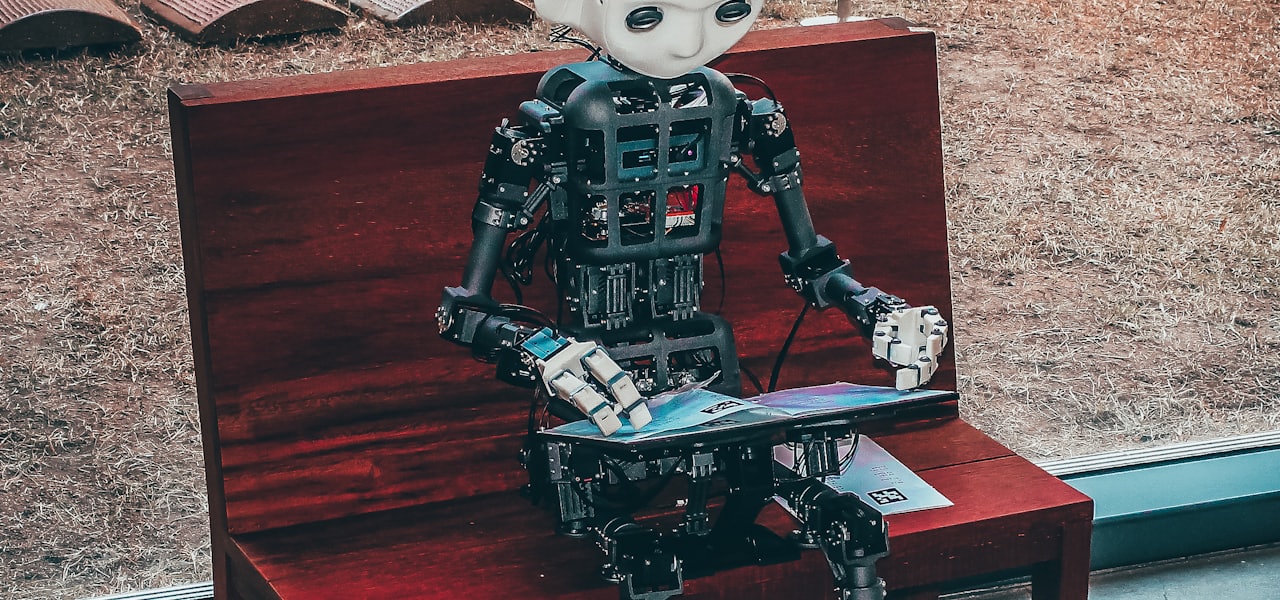
    Artificial intelligence can be used to automate aspects of the job recruitment process. Advances in artificial intelligence, such as the advent of machine learning and the growth of big data, enable AI to be utilized to recruit, screen, and predict the success of applicants. Proponents of artificial intelligence in hiring claim it reduces bias, assists with finding qualified candidates, and frees up human resource workers' time for other tasks, while opponents worry that AI perpetuates inequalities in the workplace and will eliminate jobs. Despite the potential benefits, the ethical implications of AI in hiring remain a subject of debate, with concerns about algorithmic transparency, accountability, and the need for ongoing oversight to ensure fair and unbiased decision-making throughout the recruitment process. == Background == It is common for companies to use AI to automate aspects of their hiring process, especially the hospitality, finance, and tech industries. == Uses == === Screeners === Screeners are tests that allow companies to sift through a large applicant pool and extract applicants that have desirable features. What factors are used to screen applicants is a concern to ethicists and civil rights activists. A screener that favors people who have similar characteristics to those already employed at a company may perpetuate inequalities. For example, if a company that is predominantly white and male uses its employees' data to train its screener it may accidentally create a screening process that favors white, male applicants. The automation of screeners also has the potential to reduce biases. Biases against applicants with African American sounding names have been shown in multiple studies. An AI screener has the potential to limit human bias and error in the hiring process, allowing more minority applicants to be successful. === Recruitment === Recruitment involves the identification of potential applicants and the marketing of positions. AI is commonly utilized in the recruitment process because it can help boost the number of qualified applicants for positions. Companies are able to use AI to target their marketing to applicants who are likely to be good fits for a position. This often involves the use of social media sites advertising tools, which rely on AI. Facebook allows advertisers to target ads based on demographics, location, interests, behavior, and connections. Facebook also allows companies to target a "look-a-like" audience, that is the company supplies Facebook with a data set, typically the company's current employees, and Facebook will target the ad to profiles that are similar to the profiles in the data set. Additionally, job sites like Indeed, Glassdoor, and ZipRecruiter target job listings to applicants that have certain characteristics employers are looking for. Targeted advertising has many advantages for companies trying to recruit such being a more efficient use of resources, reaching a desired audience, and boosting qualified applicants. This has helped make it a mainstay in modern hiring. Who receives a targeted ad can be controversial. In hiring, the implications of targeted ads have to do with who is able to find out about and then apply to a position. Most targeted ad algorithms are proprietary information. Some platforms, like Facebook and Google, allow users to see why they were shown a specific ad, but users who do not receive the ad likely never know of its existence and also have no way of knowing why they were not shown the ad. === Interviews === Chatbots were one of the first applications of AI and are commonly used in the hiring process. Interviewees interact with chatbots to answer interview questions, and an analysis of their responses can be generated by AI. HireVue has created technology that analyzes interviewees' responses and gestures during recorded video interviews. Over 12 million interviewees have been screened by the more than 700 companies that utilize the service. == Controversies == Artificial intelligence in hiring confers many benefits, but it also has some challenges that have concerned experts. AI is only as good as the data it is using. Biases can inadvertently be baked into the data used in AI. Often companies will use data from their employees to decide what people to recruit or hire. This can perpetuate bias and lead to more homogenous workforces. Facebook Ads was an example of a platform that created such controversy for allowing business owners to specify what type of employee they are looking for. For example, job advertisements for nursing and teach could be set such that only women of a specific age group would see the advertisements. Facebook Ads has since then removed this function from its platform, citing the potential problems with the function in perpetuating biases and stereotypes against minorities. The growing use of Artificial Intelligence-enabled hiring systems has become an important component of modern talent hiring, particularly through social networks such as LinkedIn and Facebook. However, data overflow embedded in the hiring systems, based on Natural Language Processing (NLP) methods, may result in unconscious gender bias. Utilizing data driven methods may mitigate some bias generated from these systems It can also be hard to quantify what makes a good employee. This poses a challenge for training AI to predict which employees will be best. Commonly used metrics like performance reviews can be subjective and have been shown to favor white employees over black employees and men over women. Another challenge is the limited amount of available data. Employers only collect certain details about candidates during the initial stages of the hiring process. This requires AI to make determinations about candidates with very limited information to go off of. Additionally, many employers do not hire employees frequently and so have limited firm specific data to go off. To combat this, many firms will use algorithms and data from other firms in their industry. AI's reliance on applicant and current employees personal data raises privacy issues. These issues effect both the applicants and current employees, but also may have implications for third parties who are linked through social media to applicants or current employees. For example, a sweep of someone's social media will also show their friends and people they have tagged in photos or posts. == AI and the future of hiring == Artificial intelligence along with other technological advances such as improvements in robotics have placed 47% of jobs at risk of being eliminated in the near future. In 2016 the founder of the World Economic Forum, Klaus Schwab, called AI and related technology the "Fourth Industrial Revolution". According to some scholars, however, the transformative impact of AI on labor has been overstated. The "no-real-change" theory holds that an IT revolution has already occurred, but that the benefits of implementing new technologies does not outweigh the costs associated with adopting them. This theory claims that the result of the IT revolution is thus much less impactful than had originally been forecasted. Other scholars refute this theory claiming that AI has already led to significant job loss for unskilled labor and that it will eliminate middle skill and high skill jobs in the future. This position is based around the idea that AI is not yet a technology of general use and that any potential 4th industrial revolution has not fully occurred. A third theory holds that the effect of AI and other technological advances is too complicated to yet be understood. This theory is centered around the idea that while AI will likely eliminate jobs in the short term it will also likely increase the demand for other jobs. The question then becomes will the new jobs be accessible to people and will they emerge near when jobs are eliminated. == AI use in hiring for candidates == Job seekers now commonly encounter AI-driven tools at multiple stages, including automated resume parsing, video interview analysis, chatbots for frequently asked questions, and real‑time application updates. Some candidates also employ AI career agents, designed to optimize job searches, tailor applications, and interface with hiring teams. A 2025 Australian study found that AI-driven video interviews exhibited transcription error rates of up to 22% for non‑native speakers and those with speech-related disabilities, raising concerns of discrimination. A 2017 study in the Journal of Sociology found persistent gender and racial disparities in AI screening tools, even when fairness interventions are applied. Industry observers describe a growing “AI arms race” in recruitment, where both employers and candidates increasingly rely on automated agents. Employers use recruiting systems to source and filter applicants, while candidates deploy AI agents to prepare and submit applications. == Regulations == The Artifici

    Read more →
  • WordNet

    WordNet

    WordNet is a lexical database of semantic relations between words that links words into semantic relations including synonyms, hyponyms, and meronyms. The synonyms are grouped into synsets with short definitions and usage examples. It can thus be seen as a combination and extension of a dictionary and thesaurus. Its primary use is in automatic text analysis and artificial intelligence applications. It was first created in the English language and the English WordNet database and software tools have been released under a BSD style license and are freely available for download. The latest official release from Princeton was released in 2011. Princeton currently has no plans to release any new versions due to staffing and funding issues. New versions are still being released annually through the Open English WordNet website. Until about 2024 an online version was previously available through wordnet.princeton.edu. That version of WordNet has been deprecated, but a new online version is available at en-word.net. There are now WordNets in more than 200 languages. == History and team members == WordNet was first created in 1985, in English only, in the Cognitive Science Laboratory of Princeton University under the direction of psychology professor George Armitage Miller. It was later directed by Christiane Fellbaum. The project was initially funded by the U.S. Office of Naval Research, and later also by other U.S. government agencies including the DARPA, the National Science Foundation, the Disruptive Technology Office (formerly the Advanced Research and Development Activity) and REFLEX. George Miller and Christiane Fellbaum received the 2006 Antonio Zampolli Prize for their work with WordNet. The Global WordNet Association is a non-commercial organization that provides a platform for discussing, sharing and connecting WordNets for all languages in the world. Christiane Fellbaum and Piek Th.J.M. Vossen are its co-presidents. == Database contents == The database contains 155,327 words organized in 175,979 synsets for a total of 207,016 word-sense pairs; in compressed form, it is about 12 megabytes in size. It includes the lexical categories nouns, verbs, adjectives and adverbs but ignores prepositions, determiners and other function words. Words from the same lexical category that are roughly synonymous are grouped into synsets, which include simplex words as well as collocations like "eat out" and "car pool." The different senses of a polysemous word form are assigned to different synsets. A synset's meaning is further clarified with a short defining gloss and one or more usage examples. An example adjective synset is: good, right, ripe – (most suitable or right for a particular purpose; "a good time to plant tomatoes"; "the right time to act"; "the time is ripe for great sociological changes") All synsets are connected by means of semantic relations. These relations, which are not all shared by all lexical categories, include: Nouns hypernym: Y is a hypernym of X if every X is a (kind of) Y (canine is a hypernym of dog) hyponym: Y is a hyponym of X if every Y is a (kind of) X (dog is a hyponym of canine) coordinate term: Y is a coordinate term of X if X and Y share a hypernym (wolf is a coordinate term of dog, and dog is a coordinate term of wolf) holonym: Y is a holonym of X if X is a part of Y (building is a holonym of window) meronym: Y is a meronym of X if Y is a part of X (window is a meronym of building) Verbs hypernym: the verb Y is a hypernym of the verb X if the activity X is a (kind of) Y (to perceive is an hypernym of to listen) troponym: the verb Y is a troponym of the verb X if the activity Y is doing X in some manner (to lisp is a troponym of to talk) entailment: the verb Y is entailed by the verb X if by doing X you must be doing Y (to sleep is entailed by to snore) coordinate term: the verb Y is a coordinate term of the verb X if X and Y share a hypernym (to lisp is a coordinate term of to yell, and to yell is a coordinate term of to lisp) These semantic relations hold among all members of the linked synsets. Individual synset members (words) can also be connected with lexical relations. For example, (one sense of) the noun "director" is linked to (one sense of) the verb "direct" from which it is derived via a "morphosemantic" link. The morphology functions of the software distributed with the database try to deduce the lemma or stem form of a word from the user's input. Irregular forms are stored in a list, and looking up "ate" will return "eat," for example. == Knowledge structure == Both nouns and verbs are organized into hierarchies, defined by hypernym or IS A relationships. For instance, one sense of the word dog is found following hypernym hierarchy; the words at the same level represent synset members. Each set of synonyms has a unique index. At the top level, these hierarchies are organized into 25 beginner "trees" for nouns and 15 for verbs (called lexicographic files at a maintenance level). All are linked to a unique beginner synset, "entity". Noun hierarchies are far deeper than verb hierarchies. Adjectives are not organized into hierarchical trees. Instead, two "central" antonyms such as "hot" and "cold" form binary poles, while 'satellite' synonyms such as "steaming" and "chilly" connect to their respective poles via a "similarity" relations. The adjectives can be visualized in this way as "dumbbells" rather than as "trees". == Psycholinguistic aspects == The initial goal of the WordNet project was to build a lexical database that would be consistent with theories of human semantic memory developed in the late 1960s. Psychological experiments indicated that speakers organized their knowledge of concepts in an economic, hierarchical fashion. Retrieval time required to access conceptual knowledge seemed to be directly related to the number of hierarchies the speaker needed to "traverse" to access the knowledge. Thus, speakers could more quickly verify that canaries can sing because a canary is a songbird, but required slightly more time to verify that canaries can fly (where they had to access the concept "bird" on the superordinate level) and even more time to verify canaries have skin (requiring look-up across multiple levels of hyponymy, up to "animal"). While such psycholinguistic experiments and the underlying theories have been subject to criticism, some of WordNet's organization is consistent with experimental evidence. For example, anomic aphasia selectively affects speakers' ability to produce words from a specific semantic category, a WordNet hierarchy. Antonymous adjectives (WordNet's central adjectives in the dumbbell structure) are found to co-occur far more frequently than chance, a fact that has been found to hold for many languages. == As a lexical ontology == WordNet is sometimes called an ontology, a persistent claim that its creators do not make. The hypernym/hyponym relationships among the noun synsets can be interpreted as specialization relations among conceptual categories. In other words, WordNet can be interpreted and used as a lexical ontology in the computer science sense. However, such an ontology should be corrected before being used, because it contains hundreds of basic semantic inconsistencies; for example there are, (i) common specializations for exclusive categories and (ii) redundancies in the specialization hierarchy. Furthermore, transforming WordNet into a lexical ontology usable for knowledge representation should normally also involve (i) distinguishing the specialization relations into subtypeOf and instanceOf relations, and (ii) associating intuitive unique identifiers to each category. Although such corrections and transformations have been performed and documented as part of the integration of WordNet 1.7 into the cooperatively updatable knowledge base of WebKB-2, most projects claiming to reuse WordNet for knowledge-based applications (typically, knowledge-oriented information retrieval) simply reuse it directly. WordNet has also been converted to a formal specification, by means of a hybrid bottom-up top-down methodology to automatically extract association relations from it and interpret these associations in terms of a set of conceptual relations, formally defined in the DOLCE foundational ontology. In most works that claim to have integrated WordNet into ontologies, the content of WordNet has not simply been corrected when it seemed necessary; instead, it has been heavily reinterpreted and updated whenever suitable. This was the case when, for example, the top-level ontology of WordNet was restructured according to the OntoClean-based approach, or when it was used as a primary source for constructing the lower classes of the SENSUS ontology. == Limitations == The most widely discussed limitation of WordNet (and related resources like ImageNet) is that some of the semantic relations are more suited to concrete concepts than to abstract concepts. For example,

    Read more →
  • Greg Brockman

    Greg Brockman

    Gregory Brockman (born November 29, 1987) is an American entrepreneur and software engineer. He is co-founder and president of OpenAI. He began his career at Stripe in 2010, upon leaving MIT, and became CTO in 2013. He left Stripe in 2015 to co-found OpenAI, where he also served as CTO. == Early life == Brockman was born in Thompson, North Dakota, and attended Red River High School, where he excelled in mathematics, chemistry, and computer science. He won a silver medal in the 2006 International Chemistry Olympiad and became the first finalist from North Dakota to participate in the Intel science talent search since 1973. In 2003, 2005, and 2007, he attended Canada/USA Mathcamp, a summer program for mathematically talented high-school students. In 2008, Brockman enrolled at Harvard University but left a year later, briefly enrolling at the Massachusetts Institute of Technology. == Career == In 2010, he dropped out of MIT to join Stripe, a company founded by Patrick Collison, his MIT classmate, and John Collison. In 2013, he became Stripe's first CTO, while the company grew from 5 to 205 employees. Brockman left Stripe in May 2015. === OpenAI === Brockman met with Sam Altman and Elon Musk, and led the recruiting of the OpenAI founding team. Many of its members, including Ilya Sutskever, were top AI research talent that left high paying jobs for the opportunity at OpenAI. He co-founded OpenAI in December 2015 alongside Altman, Sutskever and others. The company initially operated from Brockman's living room. He led various projects at OpenAI, including OpenAI Gym and OpenAI Five, a Dota 2 bot. On February 14, 2019, OpenAI announced that they had developed a new large language model called GPT-2, but kept it private due to their concern for its potential misuse. They released the model to a limited group of beta testers in May 2019. On March 14, 2023, in a live video demo, Brockman unveiled GPT-4, the fourth iteration in the GPT series. On November 17, 2023, alongside the firing of Sam Altman, Brockman was told he had been removed from the board. Sutskever supplied the board with a document of alleged bullying by Brockman. Mira Murati said Brockman's relationship with Altman made it impossible for her to do her job, and Altman had already "fielded many requests from OpenAI employees to rein in Brockman". Brockman was to report to Murati, but on November 17, he announced that he had quit the company. On November 20, 2023, Microsoft CEO Satya Nadella announced that Brockman and Altman would join Microsoft to lead a new advanced AI research team. The following day, after a deal was reached to reinstate Altman as CEO, Brockman returned to OpenAI. Brockman took a sabbatical from August to November 2024. === Elon Musk lawsuit === Jury selection for OpenAI cofounder Elon Musk's lawsuit against OpenAI and its current executives, including Brockman, began on April 27, 2026. On April 28, 2026, trial testimony was by now underway, with Elon Musk beginning his testimony against Altman and OpenAI. On April 30, 2026 Musk would enter his third day of testimony. == Personal life == In November 2019 after a year of dating, Brockman married Anna at OpenAI's offices on a workday. Ilya Sutskever officiated. == Political activities == Brockman and his wife were the biggest donors to Donald Trump's Super PAC, MAGA Inc., in 2025 with each of them donating US$12.5 million. Brockman and his wife also donated $50 million to Leading the Future, a super PAC dedicated to AI deregulation that he helped found with Andreessen Horowitz co-founders Marc Andreessen and Ben Horowitz. OpenAI publicly expressed openness to increased regulatory oversight and has a policy against donating to such Super PACs.

    Read more →